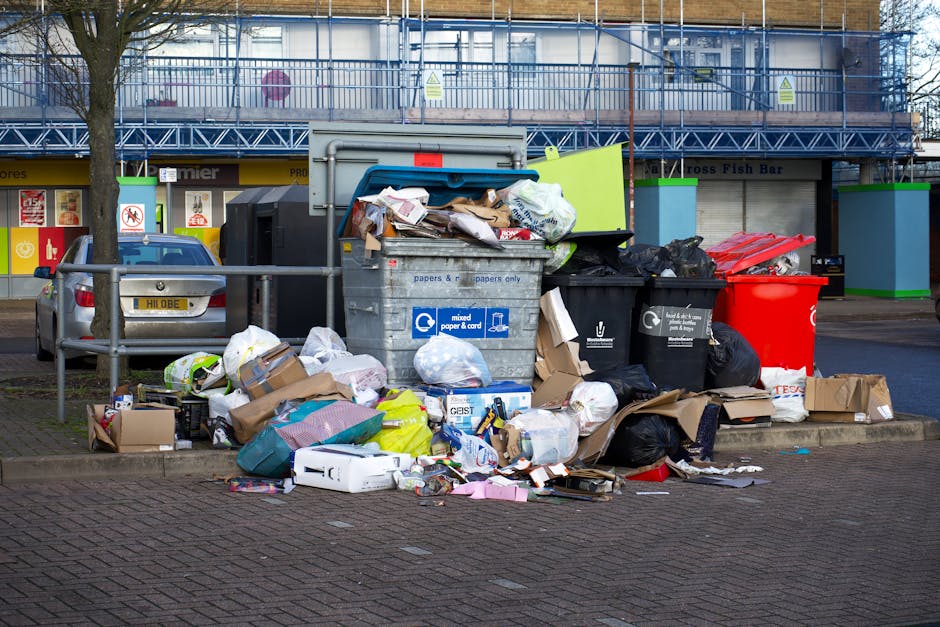
Purley Way rubbish removal for local businesses
If you run a business near Purley Way, you already know rubbish has a habit of building up at the worst possible time. One day it is a few cardboard boxes and broken packaging; next, you are stepping around old shelving, offcuts, and a bin area that looks a bit too full for comfort. Purley Way rubbish removal for local businesses is really about keeping that daily mess under control so your team can work properly, customers see a tidy site, and nothing slips into avoidable hassle.
Whether you manage a shop, trade unit, office, warehouse space, or hospitality premises, the right clearance approach can save time, reduce disruption, and help you stay on top of business waste responsibilities. This guide walks through how it works, what to expect, where the risks are, and how to choose a sensible option without overcomplicating things. Truth be told, most businesses do not need a dramatic overhaul. They just need a clear, reliable system that fits the pace of the day.
Table of Contents
- Why it matters for Purley Way businesses
- How the service works
- Key benefits and practical advantages
- Who needs this and when it makes sense
- Step-by-step guidance
- Expert tips for better results
- Common mistakes to avoid
- Tools, resources and recommendations
- Law, compliance, standards and best practice
- Options, methods and comparison
- Case study or real-world example
- Practical checklist
- Conclusion
- Frequently asked questions
Why Purley Way rubbish removal for local businesses Matters
Purley Way is busy, commercial, and often a bit relentless. Delivery vans in and out, stock rotation, maintenance work, customer footfall, fit-outs, refurbishments, the usual. In that sort of environment, waste is not just an afterthought; it is part of how the business runs. If it is left unmanaged, it starts to affect everything from presentation to health and safety.
For local businesses, rubbish removal matters for three straightforward reasons. First, it keeps the workplace usable. A cluttered back-of-house area slows staff down. Second, it protects the customer experience. Nobody wants to walk past overflowing sacks or a messy service yard before stepping into a clean store. Third, it helps reduce risk. Loose waste, damaged pallets, sharp materials, and blocked walkways create avoidable problems. And yes, even a small pile can become a larger headache by Friday afternoon.
There is also the reputational side. Near a busy retail and commercial corridor like Purley Way, appearance matters more than businesses sometimes admit. A tidy premises says you are organised. A messy one? Well, it says something else, even if the product or service is excellent.
If your business needs ongoing waste handling rather than a one-off clearance, it can help to look at business waste removal as part of a wider routine, not just a rescue job when things get out of hand.
How Purley Way rubbish removal for local businesses Works
Most business rubbish removal follows a simple pattern, though the details depend on the type and amount of waste. In practice, the process usually starts with a quick assessment of what needs to go. That might be office furniture, packaging waste, broken fixtures, builder's debris, mixed commercial rubbish, or bulky items that no ordinary bin collection will touch.
From there, the provider should confirm what can be taken, how access works, whether there are any site restrictions, and whether the job needs careful scheduling around opening hours. For example, a shop on Purley Way may need collection early in the morning before customers arrive, while a warehouse might prefer a quieter slot after dispatch has finished. Timing makes a big difference, more than people expect.
Then comes loading and removal. A good team will sort items sensibly, handle heavier objects safely, and avoid dragging rubbish through customer-facing areas where possible. Some jobs are straightforward. Others need a bit of planning, especially if the waste is bulky, awkward, or mixed with recyclable materials.
After removal, materials are normally taken for sorting, reuse, or disposal depending on their condition and type. If sustainability is important to your business, it is worth checking how that side is handled before booking. You can also review a provider's approach to recycling and sustainability if you want to understand how more of your waste may be diverted from landfill where possible.
For larger clearances involving refurbishments, strip-outs, or site work, some businesses also need help with heavier mixed loads. In those cases, builders waste clearance can be the better fit than a general tidy-up.
Key Benefits and Practical Advantages
The real value of professional rubbish removal is not just that the waste disappears. It is what happens to the rest of the business once the clutter is gone.
- Less disruption: staff can move freely, stock can be stored properly, and back areas become easier to manage.
- Better presentation: tidy premises make a more professional impression on customers, suppliers, and inspectors.
- Improved safety: fewer trip hazards, less risk from sharp materials, and cleaner access routes.
- More efficient operations: when waste is not crowding the workspace, people can actually do their jobs without shuffling around boxes every ten minutes.
- Flexible timing: removals can often be scheduled around trading hours, deliveries, or staff changes.
- Better use of space: a reclaimed storage room or yard corner can be put back to productive use.
There is a subtle but important benefit too: decision fatigue drops. When waste has a clear process, the team stops asking, "Where does this go?" every five minutes. That sounds small. It really isn't.
For office-based teams, it can make sense to pair rubbish clearance with office clearance if you are dealing with desks, chairs, filing units, or end-of-life equipment. If the items are mainly furniture, furniture clearance or furniture disposal may be more efficient than treating everything as generic rubbish.
Who This Is For and When It Makes Sense
This type of service suits a wide range of local businesses around Purley Way. If you have an active premises, regular deliveries, or frequent fit-out changes, there is a good chance you will need support at some point.
- Retail units: packaging, damaged stock, display material, old shelving, and periodic store refresh waste.
- Offices: desks, chairs, confidential filing furniture, boxes, and redundant equipment.
- Hospitality sites: broken fixtures, worn furniture, kitchen-related waste, and refurbishment debris.
- Trade and light industrial premises: offcuts, pallet waste, packaging, and mixed site rubbish.
- Landlords and managing agents: end-of-tenancy clearances, abandoned items, and post-refurbishment waste.
- Property developers and contractors: debris from strip-outs, pre-let works, and fast-turnaround jobs.
It makes sense to bring in a removal service when the waste is too much for regular bins, when it starts affecting trading space, or when you need a one-off bulk clear-out rather than ongoing collection. If a business is moving, downsizing, or refitting, the job often becomes urgent very quickly. That is normal.
Sometimes the issue is not volume but awkwardness. A room full of old stock, a garage packed with surplus materials, or a back area stacked to the ceiling is not just inconvenient, it can stall a whole plan. In those cases, a tailored clearance is usually the cleanest route. For example, businesses with storage overspill may benefit from a related garage clearance style approach if the area is being used as overflow storage.
Step-by-Step Guidance
If you want the process to feel manageable rather than chaotic, it helps to break it down. Here is the practical version.
- Identify what needs removing. Split items into general waste, bulky items, recyclable materials, and anything that may need special handling.
- Check access. Think about parking, loading points, lift access, stairs, narrow corridors, and trading hours.
- Gather photos or notes. A few clear pictures often help a provider understand the job without guesswork.
- Ask about what can be taken. Some items need separate handling, and it is better to confirm that upfront.
- Schedule the visit. Choose a time that limits disruption, especially if customers or deliveries will be on site.
- Clear a route. Make sure the team can move items safely without winding through clutter or active work areas.
- Get confirmation on costs and scope. Make sure everyone understands what is included before the job begins.
- Review the site after removal. Check that the remaining area is safe, tidy, and ready for the next task.
A quick example: a small showroom near Purley Way may have old display stands, packaging, and broken stock cages after a seasonal reset. If the manager takes twenty minutes to sort access and identify bulky items before collection, the whole job usually runs more smoothly. Less time on site, less disruption, fewer surprises. Simple, really.
Expert Tips for Better Results
There are a few habits that make rubbish removal much easier, and they are boring in the best possible way.
- Separate waste before the collection date. Even rough grouping helps the team work faster and reduces the chance of missed items.
- Keep a small "do not remove" zone. Label items or areas clearly if some stock or equipment must stay.
- Book before a major deadline. Fit-outs, inspections, handovers, and opening days have a knack for exposing last-minute chaos.
- Use photos for bigger jobs. They are quicker than long explanations and usually more accurate.
- Ask about lifting and loading support. Don't assume everyone knows the site quirks.
- Think about future waste flow. If rubbish keeps piling up in the same corner, the layout probably needs a tweak.
One small but useful habit is to create a standard waste point for staff. Nothing fancy. Just a clearly marked place for boxes, offcuts, packaging, and broken items. You will notice the difference within a week. It sounds almost too basic, but that is often where the fix begins.
For businesses that deal with regular mixed waste, reviewing broader waste removal options can help you decide whether a one-off clearance or an ongoing arrangement fits better. If you are unsure, start with the mess that causes the biggest pain and work backwards.
Common Mistakes to Avoid
A lot of waste problems come from the same few mistakes. Nothing dramatic, just avoidable stuff that snowballs.
- Leaving everything until the last minute. The more urgent the job, the more likely it gets messy and expensive.
- Assuming all waste is the same. Mixed rubbish, recyclable materials, bulky furniture, and construction debris are not always handled the same way.
- Blocking access before the team arrives. If the route is packed with stock or random boxes, removal will take longer.
- Not checking what is excluded. Some items may need special arrangements, so it is better to ask.
- Forgetting staff communication. If your team does not know what is happening, they will keep adding to the pile. Human nature, really.
- Ignoring safety near customers or visitors. Waste areas should never become a kind of accidental obstacle course.
There is also a quieter mistake: treating a one-off clearance as if it solved the underlying habit. If waste keeps accumulating in the same place, the site probably needs a better routine, not just another collection.
Tools, Resources and Recommendations
You do not need a complicated toolkit to manage business rubbish well. A few simple items and processes go a long way.
- Labels or temporary signs: useful for marking keep, remove, recycle, or staff-only areas.
- Heavy-duty sacks and bins: helps keep loose waste contained and easier to sort.
- Phone photos: surprisingly effective for getting quick estimates or planning access.
- Basic inventory list: handy for furniture, fixtures, and equipment that might be reused or moved elsewhere.
- Staff instructions: a short internal note can prevent accidental mix-ups.
When a business has a mix of clear-out needs, it can help to compare a few related services. For example, an office refurb may need office clearance, plus disposal of unwanted furniture, plus a general waste plan afterwards. A warehouse move may involve bulky items, packaging waste, and perhaps some specialist loading support. The best result usually comes from matching the service to the actual job, not the other way round.
If your clearance is part of a wider property reset, the broader business waste removal page is a good place to think through the ongoing side of things, while the pricing information on pricing and quotes can help set expectations before you commit.
Law, Compliance, Standards, or Best Practice
Commercial waste is not something to shrug off, even if the pile looks harmless. UK businesses have responsibilities around how waste is stored, handed over, and kept from causing nuisance or safety issues. The exact requirements depend on the waste type and the business setup, so it is always sensible to check what applies to your premises rather than relying on guesswork.
From a practical best-practice point of view, businesses should be able to show that waste is managed properly, staff know what to do with it, and collections happen through a responsible route. If a provider is handling your rubbish, ask the straightforward questions: how is it sorted, what happens to reusable material, and how are safety issues handled on site?
Health and safety matters too. Loose rubbish, lifting hazards, blocked exits, and sharp waste can all create avoidable risk. For that reason, it is worth reviewing a provider's general approach to health and safety and insurance and safety. Not because you expect a problem, but because it is better to know the basics before anyone starts carrying awkward items down a stairwell.
If your business values ethical supply chains, you may also want to check any related company standards, including the modern slavery statement, along with terms and conditions so you understand the service boundaries clearly. Small detail, big reassurance.
Options, Methods, or Comparison Table
Different waste scenarios call for different approaches. Here is a simple comparison to help you decide what fits best.
| Method | Best for | Pros | Watch-outs |
|---|---|---|---|
| Ad hoc rubbish removal | Occasional build-ups, one-off clear-outs | Fast, flexible, good for mixed loads | Not ideal for ongoing, predictable waste |
| Planned business waste removal | Regular commercial waste and overflow | More orderly, easier to schedule, consistent | Needs routine and clear internal process |
| Office or furniture clearance | Desks, chairs, storage, display units | Great for refurbishments and relocations | May need sorting by item type |
| Builders waste clearance | Refits, strip-outs, works-related debris | Handles heavier, messier site waste | Needs stronger access planning and safety awareness |
For some businesses, the answer is not one method forever. It is a mix. A retailer might use planned waste handling week to week, then book a larger clearance after a seasonal reset. A cafe might need regular general removal, plus a bigger furniture disposal job after a refurb. That is normal and often the most efficient approach.
Case Study or Real-World Example
Imagine a small retail unit just off Purley Way that has been trading steadily through a busy quarter. Back storage is full of cardboard, broken display fixtures, a couple of worn cabinets, and a stack of outdated promotional material. Staff have been working around it for weeks. Nothing dramatic, just a slow creep of clutter.
The manager sets aside one morning before opening to sort what stays and what goes. They separate reusable stock, mark a few items for collection, and clear a path from the back store to the loading point. The removal team arrives, works through the bulky items first, then clears the mixed waste without disrupting the shop floor. By lunchtime, the back area is usable again and the staff have a bit of breathing room.
What changed? Not magic. Better timing, clearer sorting, and a decision to deal with the problem before it became a proper bottleneck. That is usually how it goes. No drama, just relief.
Practical Checklist
Use this quick checklist before booking rubbish removal for your business:
- List the items or waste types that need removing.
- Separate bulky items from loose waste.
- Check access routes, parking, and loading space.
- Decide whether the job needs to happen outside trading hours.
- Ask if any items require special handling.
- Take clear photos of the site if the job is larger.
- Confirm what is included before the visit.
- Make sure staff know what is going and what must stay.
- Plan where the remaining waste will go after the clearance.
- Review how to stop the same build-up happening again.
If you want help with the commercial side of your clearance planning, it is worth looking at pricing and quotes early so there are fewer surprises later on. A clear scope usually makes the whole process less stressful.
Conclusion
Purley Way rubbish removal for local businesses is really about keeping operations smooth, presentable, and safe. It is not just a cleanup job. It is part of how a local business stays organised when the day gets busy and the waste starts to stack up. The best approach is usually simple: clear what needs clearing, schedule it properly, and build a routine so the same problem does not keep returning.
For many businesses, the value shows up in small ways. A quieter back room. Easier deliveries. Fewer trip hazards. A better first impression at the door. Nothing flashy, but absolutely worth doing.
If you are comparing your options or planning a clearance around a deadline, take a moment to review the business pages that fit your situation, then choose the approach that keeps things tidy without slowing the team down. That little bit of planning goes a long way.
Get a free quote today and see how much you can save.
Frequently Asked Questions
What types of business waste can be removed from Purley Way premises?
Most local commercial clearances can handle general rubbish, packaging, bulky items, office furniture, shop fittings, and mixed waste from refurbishments or site clean-outs. If you have unusual items, it is best to check in advance so there are no surprises on the day.
Is rubbish removal suitable for small businesses or only large sites?
It works for both. A small office with a few unwanted desks may need the service just as much as a larger warehouse dealing with ongoing clutter. The scale changes, but the need is often the same: get the space back under control.
How do I know whether I need business waste removal or a one-off clearance?
If you have rubbish building up regularly, business waste removal may be the better fit. If the issue is a single build-up, office move, refit, or storage clean-out, a one-off clearance is usually more sensible. In practice, many businesses use both at different times.
Can rubbish removal be arranged outside business hours?
Often, yes. That is especially helpful for retail, hospitality, and customer-facing sites where you do not want the job happening during trading hours. Early mornings or quieter time slots are usually easier all round.
What should I prepare before the team arrives?
Prepare access, group the items that need removing, and let staff know what is being cleared. If possible, take a few photos and make sure the route to the collection point is free. A bit of prep saves a lot of faff.
How does rubbish removal help with health and safety?
It reduces trip hazards, clears blocked routes, and keeps sharp or awkward items out of busy areas. That matters in commercial settings where staff, visitors, and deliveries all share the same space.
Are recyclable materials handled separately?
They should be wherever possible, especially if the provider has a clear recycling process. It is sensible to ask how materials are sorted and whether reusable items are diverted before disposal. That side of the job matters more than people think.
What happens if my waste includes furniture or fixtures?
Those items may be better treated as furniture clearance rather than general rubbish, especially if they are bulky or reusable. That is where service matching helps, because not everything needs to be lumped together under one label.
Can a business clearance include builder's waste after refurbishment?
Yes, though it is usually better to use a service designed for heavier, messier site waste. For refits and strip-outs, builders waste clearance is often the cleaner option than a standard tidy-up.
How should I compare providers for rubbish removal?
Look at clarity, safety, timing, and how well they explain what is included. Also check practical pages such as terms, safety information, and pricing so you understand the basics before booking. The cheapest option is not always the best value if it causes delays or confusion.
Is there anything my business should keep in mind about compliance?
Yes. Businesses should manage waste responsibly, keep it stored safely, and make sure collection arrangements are appropriate for the waste type. If you are unsure about something specific, ask before the job goes ahead. A quick check now is better than a headache later.
Where can I learn more about the company's standards and policies?
You can review pages such as about us, health and safety, and recycling and sustainability to get a clearer feel for how the service is run and what matters behind the scenes.
What is the best first step if I am not sure what service I need?
Start by listing the waste, taking a couple of photos, and deciding whether the issue is ongoing or one-off. From there, it becomes much easier to match the right service. If you are still unsure, a short enquiry usually clears things up fast.
And honestly, that first step is often the hardest one. Once you make it, the rest tends to fall into place.